

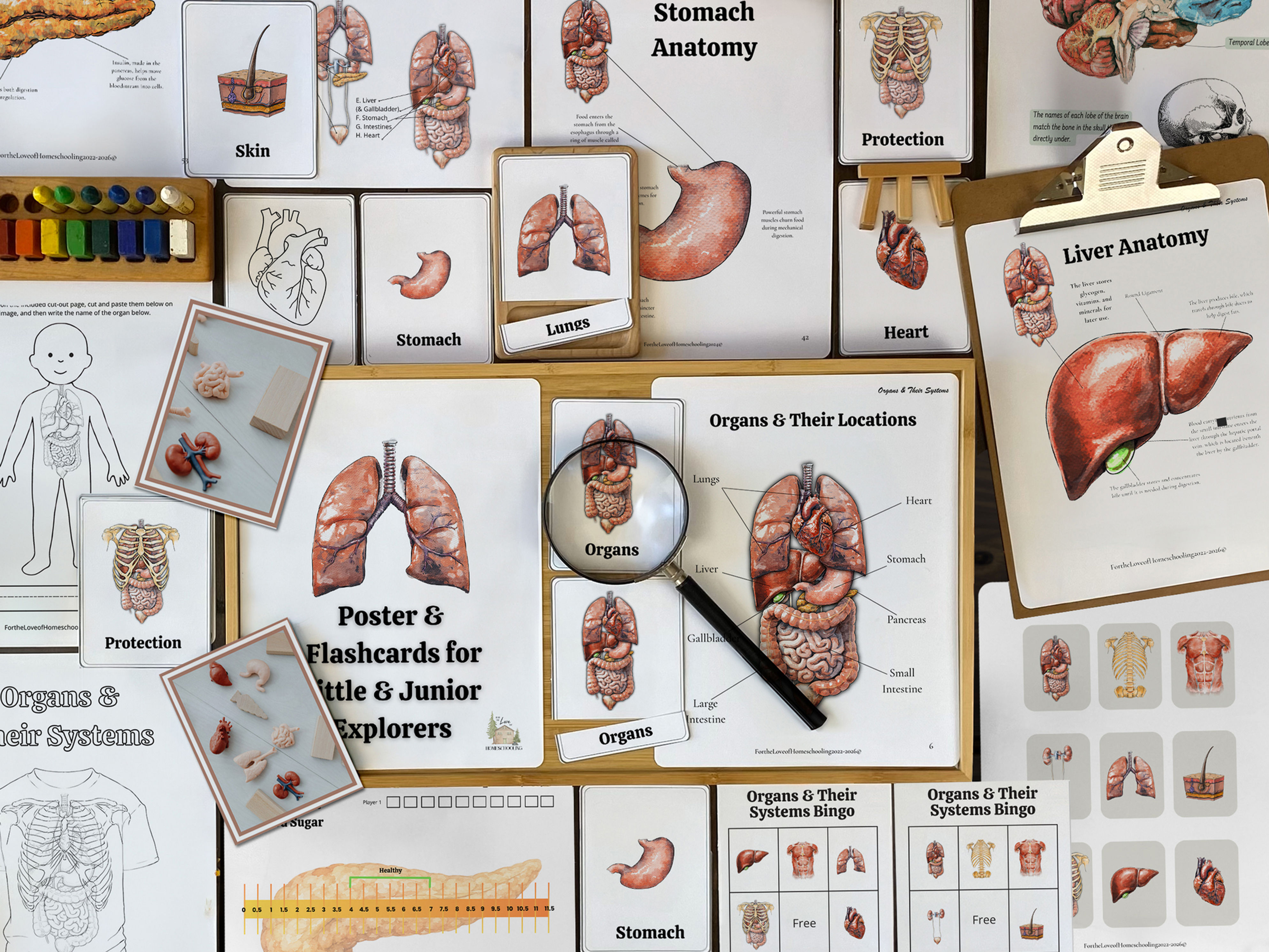

Organs & Their Systems Nature Study Club
Explore the remarkable organs and systems that keep the human body working each day! This 20-day family-style unit study introduces children to the structure and function of major organs while helping them understand how individual organs work together as part of larger body systems.
Throughout the study, students will explore the lungs, stomach, small intestine, liver, pancreas, kidneys, bladder, and skin. They will investigate the respiratory, digestive, urinary, and integumentary systems while learning about tissues, organ function, nutrient absorption, digestion, waste removal, homeostasis, and the interconnected nature of the human body. The study also introduces what can happen when an organ stops working properly, medical interventions that support or replace organ function, and the tools healthcare professionals use to assess organ health.
The 20-day schedule includes engaging daily readings, anatomy posters, hands-on workbook activities, a full-size organ model, flashcards, group discussions, STEM exploration, art, poetry teatime, games, review activities, and a final student project and presentation. These varied learning experiences allow children to observe, create, investigate, and communicate what they have learned.
Four age-level workbooks make it possible for the entire family to study the human body together:
- Little Explorer, ages 3–5, uses tracing, matching, counting, coloring, cut-and-paste activities, and simple crafts.
- Junior Explorer, ages 6–8, includes early writing, copywork, organ identification, anatomy activities, and fine motor practice.
- Senior Explorer, ages 9–11, explores the unit content through writing, STEM, art, organ classification, and more detailed anatomy activities.
- Expert Explorer, ages 12 and older, challenges students with higher-level writing, scientific investigation, data collection, analysis, creative applications, and independent project work.
From the first introduction to organs through the final presentation and celebration, this study gives students a detailed yet approachable look inside the human body and encourages a deeper appreciation for the many systems working together every moment of the day.
