


Common Hippopatomus Unit
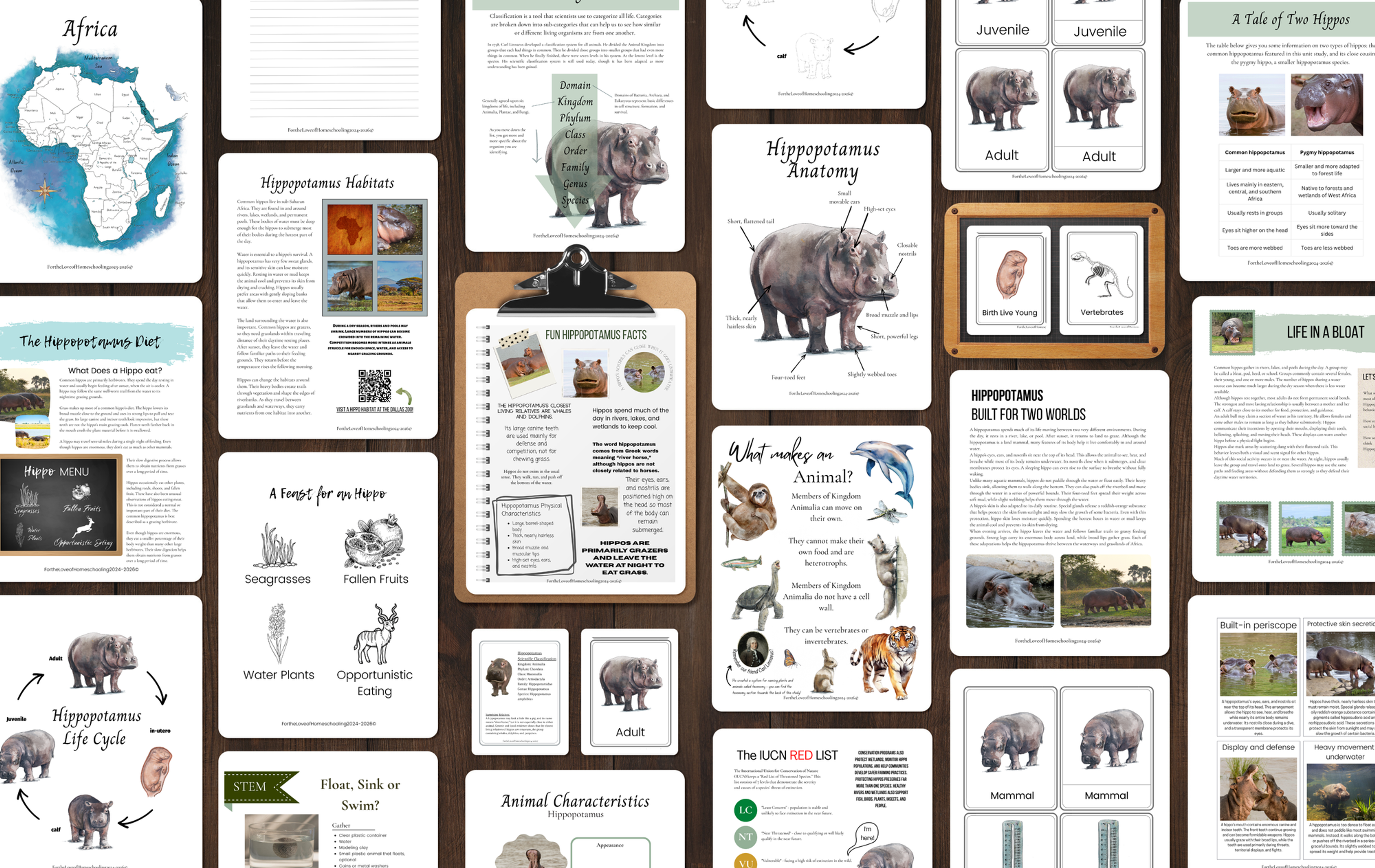
Explore one of Africa’s most powerful and fascinating mammals with this hands-on Hippopotamus Zoology Unit Study! Designed for children ages 3–12, this study allows families to learn together through engaging readings, differentiated activities, beautiful printables, nature journaling, art, STEM, and more.
Children will discover how hippopotamuses are uniquely built for life both on land and in water. They will explore hippo anatomy, adaptations, diet, social behavior, life cycle, habitat, taxonomy, and conservation. Older and younger explorers can work at their own levels while studying the same topics together.
A special cultural study takes children into ancient Egypt to meet William, The Metropolitan Museum of Art’s famous faience hippopotamus, and examine how hippos represented both danger and renewal along the Nile.
Inside this unit study, you will find:
A flexible 10-day study schedule
Book and video recommendations
Hippopotamus fact sheets and educational posters
Activities for younger and older explorers
Documentary viewing questions
Hippopotamus life cycle readings and activities
Anatomy, adaptations, and creature feature studies
Taxonomy and scientific classification
A comparison of common and pygmy hippopotamuses
Social behavior and communication
Diet and feeding activities
African habitat and range studies
Mapping and geography activities
Conservation education
Nature journaling and creative writing
Vocabulary activities
A special study of hippos in ancient Egypt
An introduction to William the faience hippopotamus
Faience-inspired art
Watercolor and habitat art
Hands-on STEM investigations
Hippopotamus-themed recipes
Games, puzzles, and review activities
Whether your child is fascinated by enormous animals, African wildlife, wetland habitats, or ancient Egypt, this study provides a memorable way to explore science, geography, history, and art together. Print the pages that work best for your family, gather a few simple supplies, and begin your hippopotamus adventure!
